

Understanding the right coconut shell briquette mixture composition is a crucial step for anyone aiming to produce high-quality charcoal briquettes. Before diving deeper into the technical aspects, readers may find it helpful to explore the main reference article, Ideal Composition of Coconut Shell Briquette Mixture, which explains the fundamental principles behind briquette formulation. In addition, the homepage of jacoid.com provides broader insights into coconut-based industries, processing methods, and sustainable products, offering practical information on coconut shell utilization and charcoal production.
Many producers and users recognize coconut shell briquettes for their high calorific value, low ash content, and environmentally friendly characteristics. However, producers can fully achieve these advantages only when they carefully control the mixture composition. An improper balance of materials often leads to briquettes that burn unevenly, produce excessive smoke, or crumble easily during handling and transportation.
Core Materials in Coconut Shell Briquette Mixture Composition
The primary component of any coconut shell briquette mixture is carbonized coconut shell charcoal. Producers fully carbonize the material, remove impurities, and grind it finely to ensure uniformity. Charcoal particle size strongly affects briquette density and combustion efficiency, as finer particles create stronger briquettes while coarse particles weaken the structure.
The second essential element is the binder. Producers usually prefer natural binders such as tapioca starch because they are safe, affordable, and widely available. The binder holds charcoal particles together and helps the briquette maintain its shape during drying and use. In an ideal coconut shell briquette mixture composition, the binder ratio typically ranges from 3% to 8%, depending on the required strength and application.
Water Ratio and Mixing Process
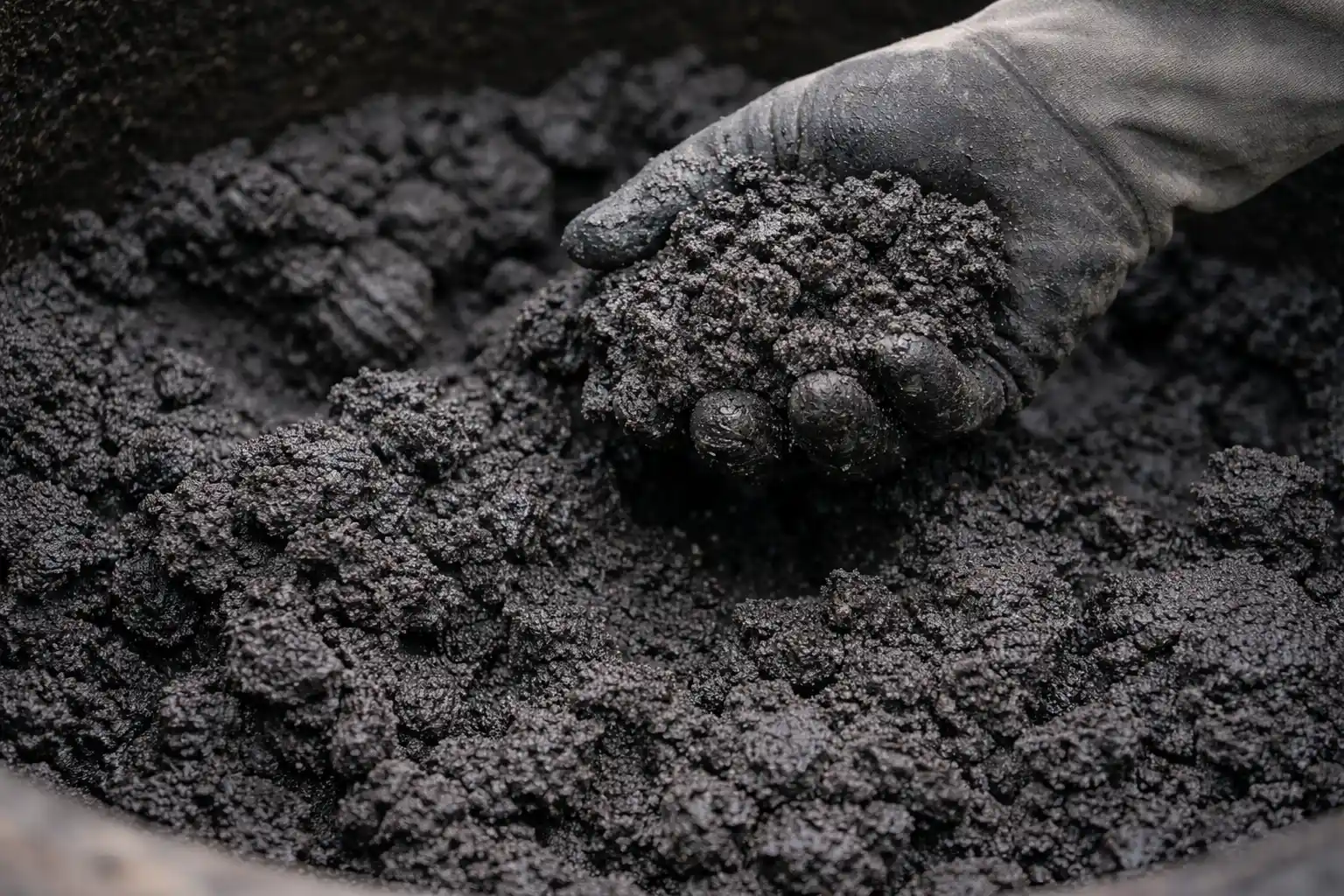
Water is another critical factor that directly affects the mixing process and molding quality. Although it does not act as a structural component, the right amount of water helps shape the mixture properly. Too little water makes the mixture difficult to mold, while excess water extends drying time and may cause cracks. The ideal mixture reaches a dough-like consistency that remains firm and easy to shape.
Proper mixing distributes the binder evenly throughout the charcoal powder and prevents weak spots that can cause briquettes to break or burn unevenly. Producers commonly use mechanical mixers for large-scale production, while thorough manual mixing still delivers effective results for small batches.
Impact on Performance and Efficiency
A well-balanced coconut shell briquette mixture composition directly influences burning duration, heat stability, and ash residue. Briquettes with the correct composition burn longer, produce steady heat, and leave minimal ash. This makes them ideal for household cooking, barbecuing, and even industrial applications such as shisha or metallurgy support processes.
Consistency is also a key benefit. When producers maintain a standardized mixture composition, the quality of each batch becomes more predictable. This consistency builds trust with buyers and improves market competitiveness, especially in export-oriented briquette businesses.
Conclusion
In conclusion, achieving the ideal coconut shell briquette mixture composition requires more than simply combining materials—it depends on understanding how charcoal quality, binder percentage, and water ratio interact during combustion. A balanced formulation produces briquettes with strong structure, efficient and stable heat, and minimal ash. By standardizing the mixture and applying proper mixing and processing techniques, producers can improve product durability, meet market demands, and support sustainable waste utilization.









Leave a Reply